
Every building manager knows the rhythm of a building where the units are owner-occupied. Families stay for years, sometimes decades. You know who lives where, how many people are in each unit, what each one's consumption pattern looks like. When something strays from normal, you notice fast, because you know what normal is.
In buildings with a lot of rentals, that memory never forms. Unit 82 had three different families in two years. Each one with a different number of residents, a different routine, a different consumption level. What was normal for one becomes an anomaly for the next, and the building manager has no way to track that based on personal knowledge.
Brazil is becoming a country of renters
Rentals now account for 23.8% of Brazilian households, the highest level in the IBGE series' history. In 2016 there were 12.2 million rented households; by 2025 that number reached 18.9 million, a 54.1% increase. Over the same period, apartments went from 13.7% to 17.1% of the country's total housing stock. In other words: more people living in condo buildings, and a growing share of them moving in and out on contracts that turn over every 12 or 30 months, according to Gazeta de São Paulo Dcmais.
For the building manager, that means something concrete: the building's consumption map goes out of date on its own, all the time.

“The apartment is the same. Whoever lives in it isn't.”
Where turnover complicates consumption management
When one resident leaves and another moves in, three things change at once.
The number of people in the unit. A couple leaves, a family of five moves in. That unit's consumption doubles, and that's expected. Without a per-unit history, the building manager can't tell normal occupancy growth apart from a leak that started right along with the move.
The gap between one lease and the next. The unit sits empty for weeks. Consumption should drop close to zero. If it doesn't, something's wrong: an open valve, a leak in the riser, a connection that shouldn't be active. That's one of the easiest signals to read, and one of the most ignored, because no one is watching the empty unit.
The new resident's lack of history. Whoever just moved in doesn't know the apartment's history. If there was a silent leak before the move, they inherit the problem without knowing it. The bill comes in high, they complain, and the conversation starts with no one holding any data.
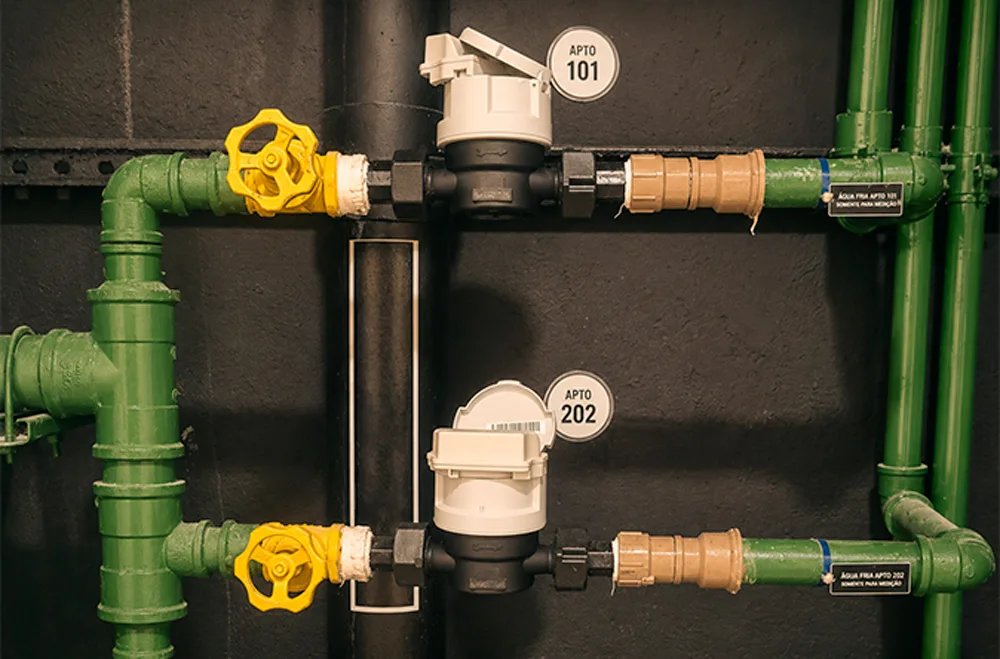
In a building with individualized metering and continuous per-apartment history, a change of resident stops being a blind spot. The platform records each unit's consumption independently of whoever's name is on the door. When unit 82 sits empty and consumption doesn't hit zero, the alarm shows up. When a new resident moves in and consumption jumps well beyond what the number of people would justify, the data shows it before the bill does.
The building manager doesn't need to personally know every family to know what's normal for each unit. The history does that work. A unit that used to consume 8 m³ and jumps to 20 m³ with no explanation is a signal, whether it's the old resident or the new one. The data doesn't depend on memory.
That also changes the relationship with an incoming tenant. Instead of discovering a problem through a high bill in the third month, the building spots the deviation in the first week and resolves it before it turns into a charge. The new resident steps into management that sees, not one that reacts.
Resident turnover is structural, not a passing phase. With expensive mortgage credit and renting established as a housing model, buildings will keep cycling through tenants. A building manager who relies on personally knowing each family to manage consumption is betting on a stability the market no longer offers. What sustains management in this scenario is the per-unit history, which stays in place even when the resident changes.
About the author
William Oliveira
Contributes to Group Link One writing about consumption management, water crises, and technology applied to condominiums.