Every building manager knows that phone call. Friday night, the booster pump stops, the water tank won't fill, and the whole building is about to run out of water until someone fixes it. From that moment on, there's no quote, no planning, and no negotiating. There's urgency. And urgency has a price.
That's the picture of reactive maintenance, the model most Brazilian condo buildings still live by: wait for the failure to happen, then act. It tends to generate higher costs because it involves more downtime, materials bought under emergency conditions, and rushed labor. Industry studies show that every real invested in preventive maintenance avoids up to five reais in emergency corrective repairs.
The schedule solves part of the problem
The classic response to this cycle is a preventive maintenance plan. NBR 5674, the ABNT standard covering building maintenance, guides that routine and legally protects the building manager who follows it, with periodic inspections of the plumbing system, electrical reviews, reservoir cleaning, and structural checks. A condo with a documented schedule spends less and gets caught off guard less.
But the schedule has a limit: it runs on the calendar, and problems don't. The semiannual plumbing inspection finds whatever is visible on the day of the visit. An internal valve that starts failing two weeks later will work in silence for another five and a half months until the next one. In installations tucked inside walls, floors, and shafts, the gap between one inspection and the next is a blind period.
“The difference between the two scenarios isn't the problem, which is the same. It's the moment it was spotted.”
The signal that arrives before the problem
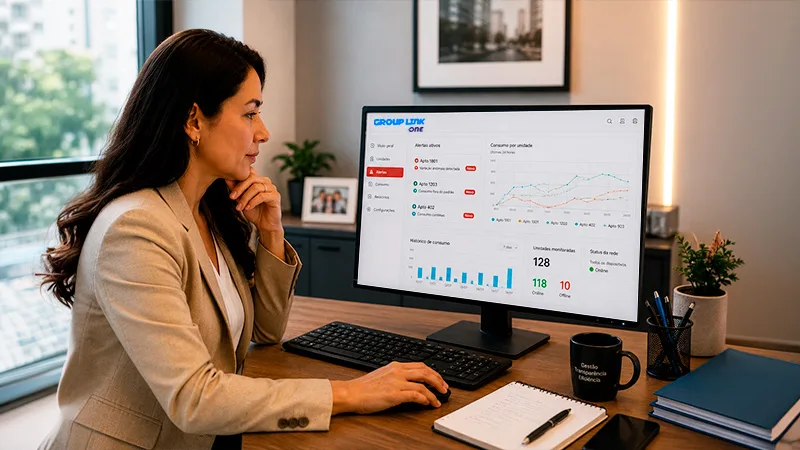
There's one piece of information that runs through that blind period the whole time: water consumption. Practically every plumbing anomaly shows up there before it shows up on the wall. A faulty valve turns into continuous consumption in the middle of the night, when the apartment should read zero. A stuck float in the reservoir turns into a flow pattern that doesn't match the building's routine. A compromised pipe turns into a consumption curve that climbs with no one having changed their habits.
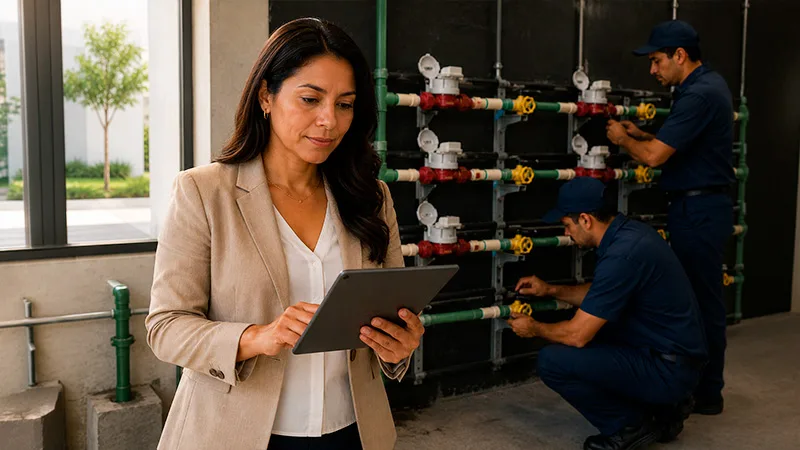
In buildings with individualized metering and continuous monitoring, these signals stop depending on the luck of a well-timed inspection. An atypical variation in one unit triggers an alert, the alert turns into a quick check, and the check turns into a simple maintenance call: replace a valve, adjust a float, fix a fitting. Hours of work, scheduled during business hours, with a quote.

Without that early signal, the same problem follows a different path. It grows quietly, shows up as seepage in the apartment below or as a spike in the shared bill, and reaches the building manager already in the construction-project category: broken walls, waterproofing, an extraordinary budget, and a difficult assembly meeting.
The difference between the two scenarios isn't the problem, which is the same. It's the moment it was spotted.
For the building manager, folding consumption into the maintenance plan means treating the anomaly as the first item on the preventive routine, and the cheapest one. NBR 5674's schedule still applies to everything structural and periodic. Continuous monitoring covers exactly the gap the schedule can't reach.
At the next budget planning meeting, it's worth putting side by side what the condo spent on emergency maintenance over the past year and how many of those cases left a trace in consumption before they blew up. In buildings with individualized history, that tally usually reveals that a good share of past projects had already given warning they were coming.
About the author
William Oliveira
Contributes to Group Link One writing about consumption management, water crises, and technology applied to condominiums.